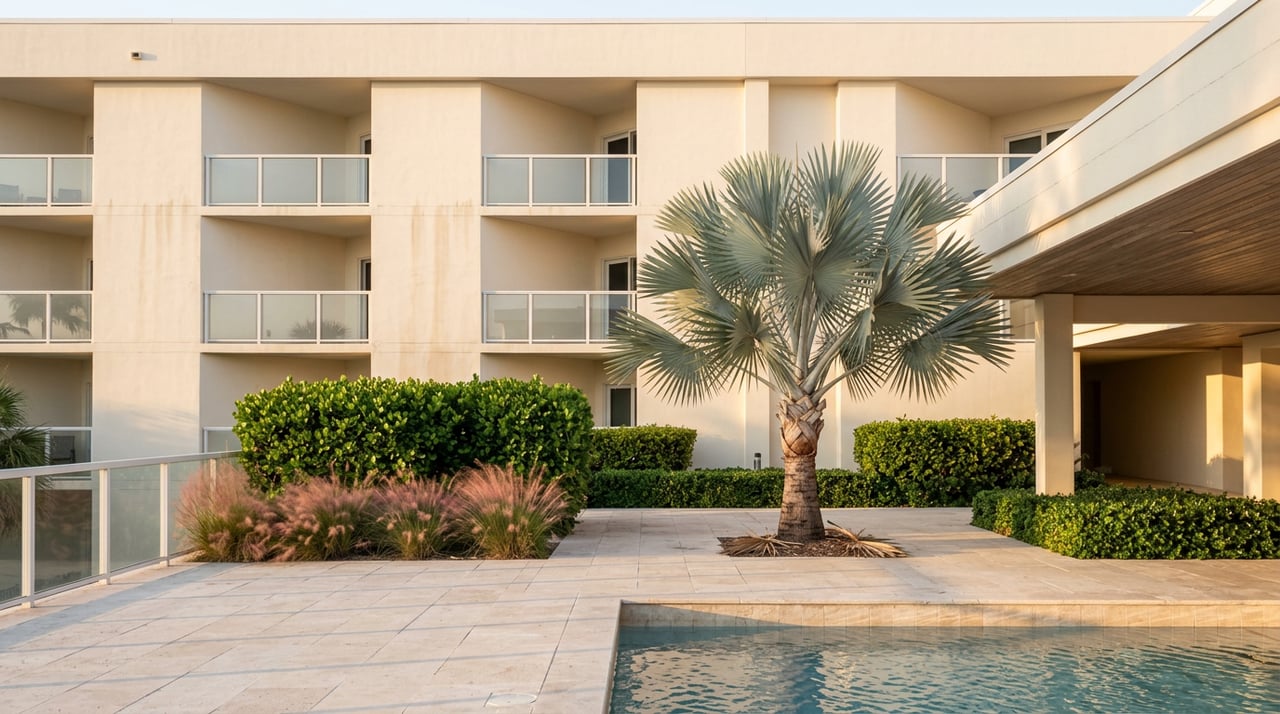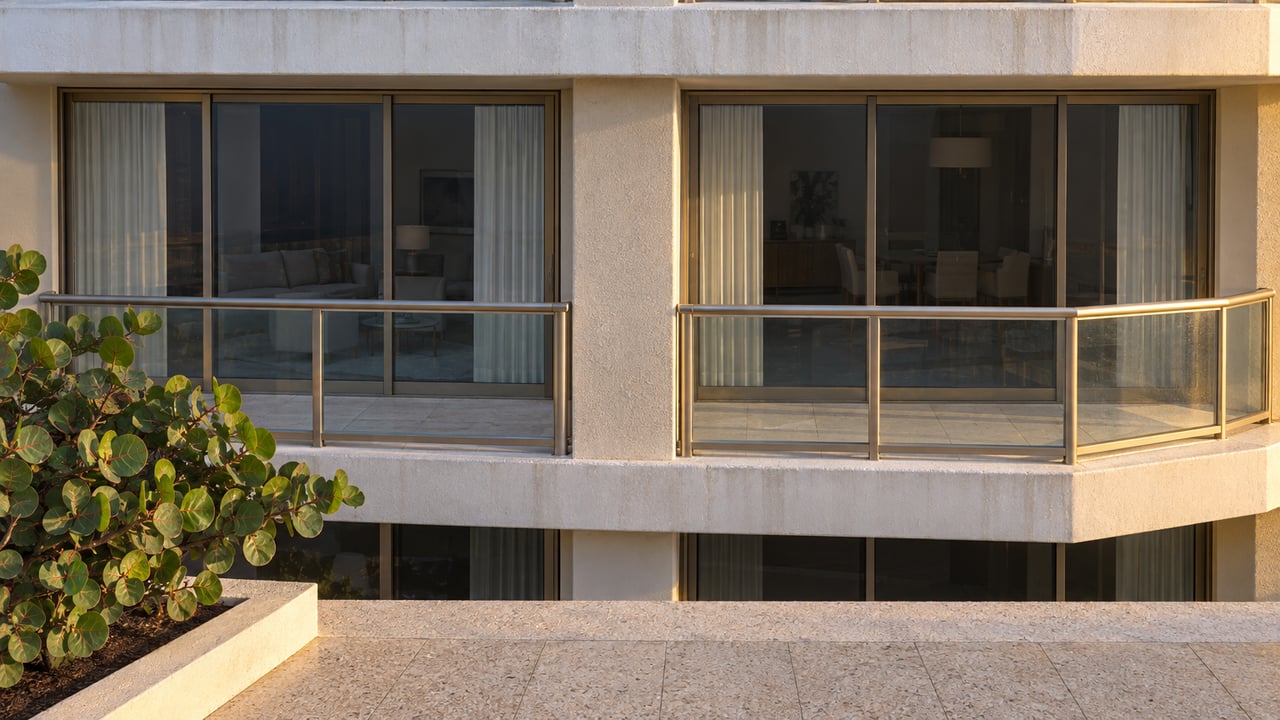
Drive north on Gulf Shore Boulevard past the Village on Venetian Bay and you will pass a construction crane standing over a stripped lot, then half a block later a 1978 tower with its original terrazzo lobby still intact. Both buildings sit on the same street, both call themselves Park Shore, and both will show up in the same search when a buyer types "Park Shore condo" into a portal. They are not the same product. One is a bet on a building that does not exist yet. The other is a bet on how a fifty-year-old structure absorbs a state law that just came fully into force this year.
That is the piece the median price hides. A single number implies one market. Gulf Shore Boulevard, the corridor that runs through Coquina Sands, The Moorings, and Park Shore, is currently running two.
A Corridor That Can Only Grow By Tearing Something Down
New construction condos are rare along this stretch of beachfront for a simple reason: there is no undeveloped land left to build on. Every new project here is a redevelopment, meaning someone bought an older building or estate lot, demolished it, and started over. That has always been true in Park Shore. What is unusual right now is how many of these projects are landing at the same time.
Four are active as of mid-2026. Rosewood Residences Naples, developed by The Ronto Group at 1601 Gulf Shore Boulevard North in Coquina Sands, is two seven-story buildings on five acres with roughly 482 linear feet of beachfront, thirteen floor plans ranging from 4,266 to 9,718 square feet, and a Q4 2026 completion target. A few blocks south, Kolter Urban's Olana Naples Residences at 1121 Gulf Shore Boulevard North will deliver twelve full-floor estate residences, each over 10,000 square feet with 80 feet of unobstructed Gulf views, with sales expected to start at $30 million. In The Moorings, 3300 Gulf Shore is building 51 residences positioned between the Gulf and Outer Doctors Bay, marketed on its dual-waterfront setting. And on the former Naples Beach Hotel and Golf Club site at 851 Gulf Shore Boulevard North, which closed in May 2021, developer The Athens Group is building a Four Seasons-anchored community with 153 beachfront condominium residences, additional golf-side homes, a retail and dining complex called Market Square, and a new Tom Fazio-designed 18-hole golf course targeted to open late 2026.
| New Development | Location | Scope | Entry Price | Target Completion |
|---|---|---|---|---|
| Rosewood Residences Naples | 1601 Gulf Shore Blvd N, Coquina Sands | 13 floor plans, 4,266–9,718 sq ft | $12M+ | Q4 2026 |
| Olana Naples Residences | 1121 Gulf Shore Blvd N | 12 estate residences, 10,000+ sq ft each | $30M | Not yet finalized |
| 3300 Gulf Shore | The Moorings | 51 residences, dual-waterfront | Not published | Not yet finalized |
| Naples Beach Club | 851 Gulf Shore Blvd N | 153 condos plus golf-side homes, new Fazio course | Not published | Late 2026 (golf course) |
None of these buildings has closed a single resale yet. There is no track record of how they hold value, how their reserves perform, or how their insurance renews. That is the first reason the corridor's median stopped meaning anything: a meaningful share of new inventory is priced entirely on projection.
Twenty-Five Other Towers Are Doing a Different Kind of Math
Park Shore's beachfront alone has more than 25 high-rise buildings, most of them delivered between the 1970s and the early 2000s. Colony Gardens, built by the Lutgert family in the early 1970s, was the first condominium development in Florida's history. LeParc, finished in 1992, was the last beachfront high-rise built in Park Shore before the corridor filled in, and it has continued through rounds of luxury upgrades since. Surfsedge, also from the 1970s, holds roughly 100 units across 15 stories and has a reputation for owners staying put for decades rather than selling. The Regent came later, delivered in the early 2000s by Lutgert Companies. Le Rivage, an older beachfront building, made news this year not for a sale but for a private eighth-floor remodel: owners who had lived there twenty years reworking a choppy original floor plan to host up to seventeen family members at once, a sign that some vintage owners are investing in their units rather than waiting for a developer to buy the building out from under them.
Every one of these buildings, along with every other Park Shore tower three stories or taller, is now operating under a law that finished phasing in this year. Florida's Structural Integrity Reserve Study requirement, created after the 2021 Champlain Towers South collapse in Surfside and refined since through follow-up legislation, closed the loophole that let associations vote to underfund their structural reserves. Buildings that had already crossed the 25-year mark, the trigger for coastal properties within three miles of the shoreline rather than the standard 30, were required to complete their first Structural Integrity Reserve Study by the end of 2025. Any association whose budget was adopted on or after December 31, 2024, can no longer vote to waive that funding. Starting January 1, 2026, the reserves have to be funded at whatever level the study says the roof, load-bearing walls, waterproofing, and other structural components actually require. The state's own condominium division lays out the mechanics in plain terms on its inspections and reserve guidance page.
For a building that spent decades keeping dues artificially low, that bill has arrived. Special assessments tied to catching up years of deferred structural reserves have run from the tens of thousands of dollars per unit into six figures at older coastal towers across the state. Florida law requires the seller to hand a buyer the milestone inspection summary and the current reserve study, or a written statement that neither exists, before closing, and a buyer who does not receive them can void the contract. That single disclosure requirement, tied to Florida Statute 718.503, now shapes negotiations at every vintage tower on the boulevard, whether or not a special assessment has actually been levied.
Why the Median You Check Today Won't Match the One You Check Next Month
Pull three different market snapshots for Park Shore condos in the same year and you will get three different numbers. One recent report put the median condo listing price at $1.86 million with units sitting on the market for a median of 91 days. A separate monthly figure put the median sale price at $2.4 million, up over 14 percent year over year, while the price per square foot in that same reading was down slightly. A trailing twelve-month figure elsewhere put the median closer to $1.8 million, down from the year before. Single-family homes in Park Shore, tracked separately, sold at a median near $2.0 million over the three months ending May 2026, down almost 15 percent from the same period the prior year, with homes taking an average of 72 days to sell. Gulf-front high-rise units, considered on their own, have recently spanned roughly $2.5 million to $18 million, and that range sits entirely below Olana's $30 million floor.
None of these figures are wrong. They are measuring different slices of the same corridor at different moments, and the slices themselves keep shifting as pre-construction sales at Rosewood and Olana start closing alongside resales at buildings that have just absorbed a reserve catch-up. A median calculated from a blend of a 1970s one-bedroom needing a special assessment and a 10,000-square-foot Olana estate residence will not describe either one accurately. That is not a data problem. It is what happens when a market that used to be reasonably uniform starts sorting itself into two tiers at once.
The Questions That Matter More Than the View
For a buyer comparing a resale unit at a vintage Park Shore tower against a pre-construction reservation at one of the four new buildings, the view and the finishes are the easy part to evaluate. The harder part is underwriting the building itself. Before writing an offer on a resale, ask for:
- The current Structural Integrity Reserve Study and whether the association's budget reflects full funding under it, not a waived or reduced version
- The most recent milestone inspection summary, including whether it identified a Phase 2 finding that requires destructive testing and remediation
- A written disclosure of any special assessment already approved by the board, even if it has not yet been formally levied to owners
- Whether the building appears on a lender restricted list, since a non-compliant or underfunded association can push a buyer toward all-cash financing or a specialized lender
For a pre-construction unit at one of the new towers, the reserve study requirement applies too. Height triggers it, not age, so even a building delivering in 2026 files a Structural Integrity Reserve Study. The difference is that a brand-new tower starts that funding plan near zero deficiency instead of catching up five decades of deferred maintenance, which is one more reason the entry price at Rosewood or Olana carries a different kind of certainty than a resale at LeParc or The Regent.
A Short FAQ
Does the new reserve law apply to buildings that haven't been built yet, like Rosewood or Olana? Yes. The Structural Integrity Reserve Study requirement is triggered by a building's height, three habitable stories or more, not its age. A tower delivering in Q4 2026 still has to file one, though its funding plan starts from a clean structural baseline rather than years of underfunded reserves.
Why does Park Shore's coastal location matter for the milestone inspection timeline? The standard milestone inspection trigger is 30 years of age. Buildings within three miles of the coastline trigger at 25 years instead. Since Park Shore's high-rise corridor sits directly on the Gulf, most of its 1970s through 1990s towers crossed that threshold years ago and have already been through at least one required inspection cycle.
If the median price numbers disagree, which one should I trust? None of them in isolation. Each reflects a different window of time and a different mix of product, old versus new, condo versus single-family, resale versus pre-construction. The more useful exercise is asking which category a specific listing actually belongs to before comparing its price to anything labeled a corridor median.
Comparing a resale tower's asking price to a pre-construction listing three buildings away only works once you know what each number is actually built from. If you are weighing a vintage Gulf Shore Boulevard unit against one of the four projects now under construction, Nita Rapp can pull the reserve study, the milestone inspection record, and the disclosure paperwork before you write an offer. Let's connect.